Passer au contenu principal
187 kb
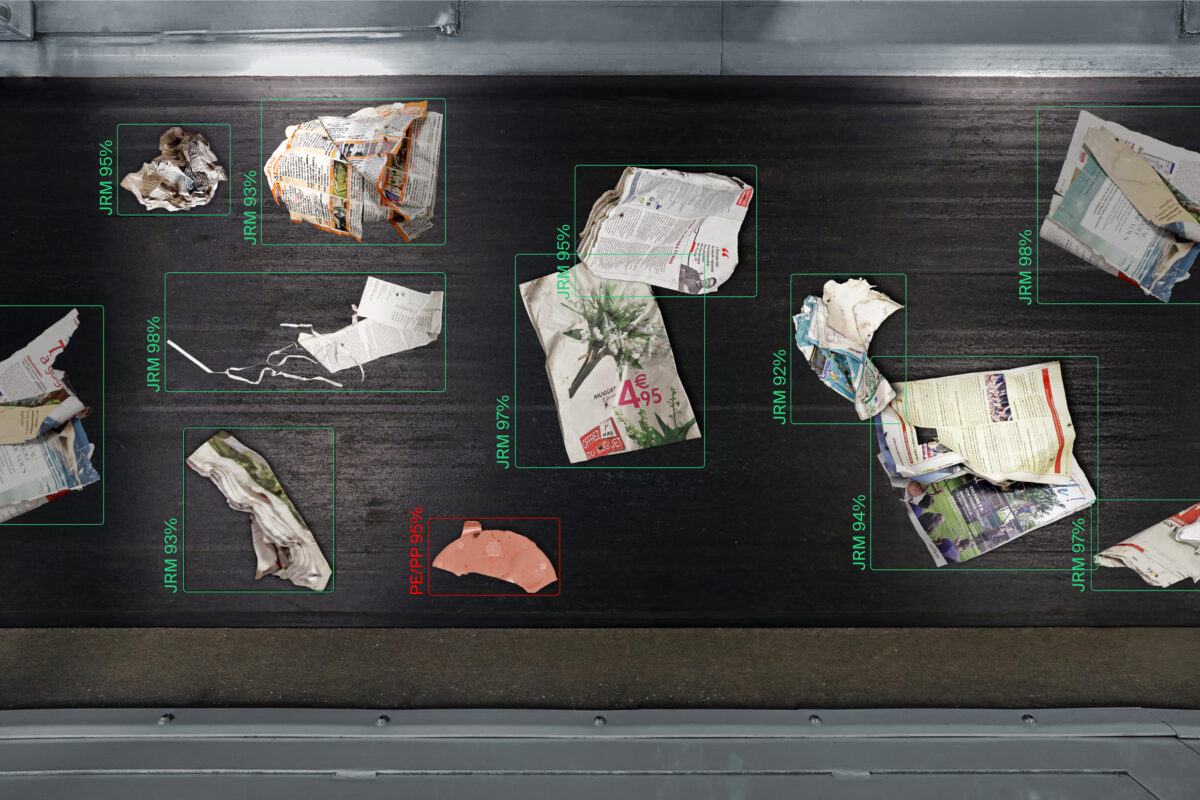
Photo showing AI-based detection of a paper waste stream on a conveyor belt to analyze material quality in a sorting center.

Aktid Deciphers – Avoiding drift, steering toward quality !  

Because mastering quality in sorting centers happens above all in the field, our experts share their insights and hands-on experience.

Quality become a daily challenge

Summer heat waves, like the ones we’re experiencing this summer, don’t just mean rising temperatures: they also affect the nature of the waste collected. In Materials Recovery Facilities (MRF), this seasonality is particularly reflected in an overrepresentation of water bottles in incoming waste streams. These variations in composition, sometimes abrupt, can disrupt process balance and lead to quality drift that’s difficult to detect in time.

In facilities processing several hundred, or even thousands, of tons of waste per week, measuring and managing quality then becomes a key challenge.

144 kb
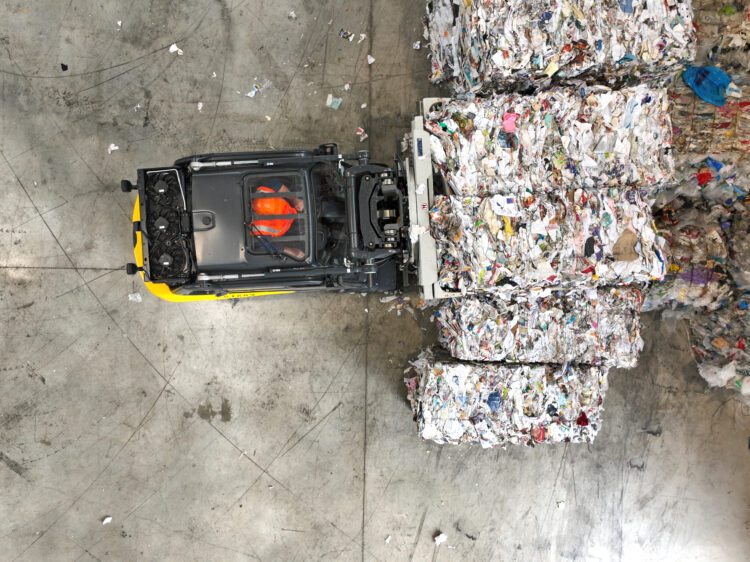
Photo illustrating a forklift handling bales of recyclable waste in a sorting center.

Why quality still hard to manage ? 

Today, quality monitoring relies mainly on periodic characterization campaigns. The principle is simple: a sample is taken from the flow, then each item is manually sorted by material category to measure the sample’s purity. This purity rate then serves as the quality rate for the entire flow.

Depending on the sorting center, these characterizations are carried out at highly variable frequencies, but generally range between one and two characterizations per flow per week.

The main challenge remains representativeness: a few dozen kilos analyzed are often used to assess several hundred tons produced. Ultimately, only a tiny fraction of the flow (around 0.02% of the flow) is actually checked.

On top of this, there’s a significant constraint for teams: a characterization takes an average of nearly an hour of work, with durations varying depending on the flow in question and sampling conditions.

Drift often detected too late 

This sampling-based approach introduces a time lag that is difficult to control.

A quality issue can go unnoticed for several days, or even several weeks. During this time, materials continue to be produced, inventory builds up, shipments are made, and any feedback or returns from downstream partners may only come in long after production has taken place.

The sorting center therefore often detects the deviation only once the consequences have already occurred.

Where does quality drift come from ?

In the field, the observed causes are rarely isolated. They often result from a combination of factors.

Factors related to process control

  • Increase in throughput to handle higher volumes;
  • Trade-off between equipment availability and the expected quality level.

Operational factors

  • Insufficient equipment cleaning;
  • Component wear;
  • Changes in sorting settings or parameters;
  • Impacts related to blockages and material build-ups.

Imput-related factors

  • Seasonal variations in waste streams;
  • Changes in material composition;
  • Local specificities of the incoming waste stream.

Human factors

  • Team experience level;
  • Staff absenteeism and turnover;
  • Ability to identify and interpret weak signals.

What are the impacts of quality drift ?


Quality drift can have multiple consequences.

Direct impacts may include material downgrading, a reduction in the buy-back price, bale rejection, additional processing, and extra logistics costs.

A particularly sensitive issue is the share of recoverable materials in rejects. When this rate increases, the operator faces a double financial penalty: on the one hand, a loss of revenue due to recoverable materials that are not captured; on the other hand, additional treatment costs, as these materials leave the process with the rejects and are treated as such.

However, indirect effects can sometimes be even more significant:

  • Loss of trust from downstream partners;
  • Reduction in local outlets and recovery channels;
  • Increased pressure regarding contractual requirements or performance targets.

What solutions can be implemented ?

Strengthening quality monitoring data

One initial approach is to strengthen the existing quality monitoring system by increasing the frequency of material characterizations, focusing efforts on the most sensitive streams, and further standardizing control methods.

However, this approach quickly reaches its limits, as it remains highly dependent on human time and resources.

Another avenue is to make better use of the data already available within the facilities: line throughput, load rates, and data collected from sorting equipment.

These indicators provide valuable support for process management, provided that the necessary time and expertise are available to interpret them. They also have a significant limitation: collected within the process itself, they only indirectly reflect the quality of the output streams and therefore provide only a partial view of the actual sorting performance.

Towards continuous quality measurement

To improve the reliability of quality monitoring, continuous flow measurement solutions can also be deployed.

This is notably the case with SmartQuality, a measurement gantry installed after the final sorting step and designed to continuously analyze outgoing streams using artificial intelligence mechanisms. The solution relies on an algorithm specifically trained for each stream to ensure more reliable and accurate identification.

Its objective is to measure material purity rates in real time, shifting from a periodic inspection approach to a continuous quality monitoring approach.


5354 kb
Photo illustrant le portique de mesure SmartQuality installé au-dessus d'un tapis convoyeur en sortie de chaîne de tri, analysant en continu les flux de déchets sortants grâce à l'intelligence artificielle.

By analyzing the entire material flow at a given point, SmartQuality provides a more accurate representation of actual operating conditions, enables process variations to be monitored, and alerts operators in real time as soon as a quality drift occurs. Another major advantage is that the solution also helps reduce the time spent on manual characterization campaigns, which are currently highly time-consuming for teams. It therefore acts as a complementary solution, enabling operators to verify compliance with the requirements defined in their quality control plan. Its objective is to measure material purity rates in real time, shifting from a periodic inspection approach to a continuous quality monitoring approach.

A decision-support tool above all

The objective is to detect quality drift, generate alerts, and enable teams to investigate more quickly in order to correct issues. Continuous quality monitoring then becomes an entry point for guiding actions and accelerating decision-making.

Beyond performance management, continuous quality measurement paves the way for improved traceability of material flows and, in the future, for more dynamic quality certification mechanisms with downstream partners. This evolution could transform the way sorting centers document and promote the quality of the materials they produce.

In the longer term, it could also progressively reduce, or even eliminate, some manual characterization activities at the sorting line output, replacing them with continuous quality monitoring based on objective data representative of the entire output.

84 kb
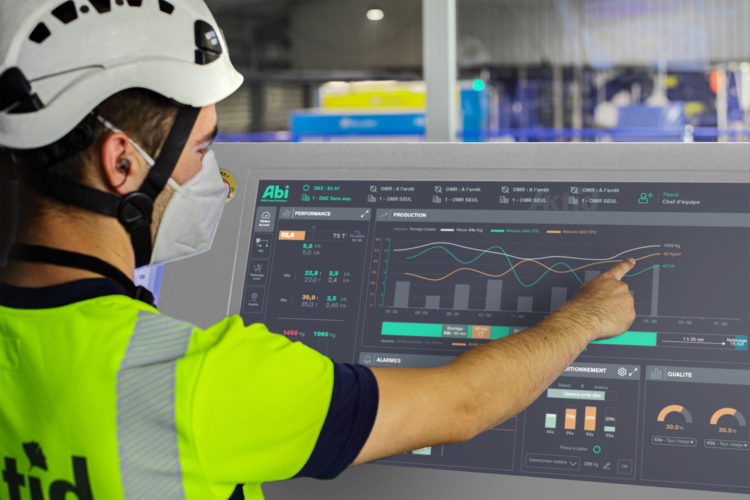
Visuel présentant le pupitre ABI, produit de la gamme des AKTID Smart Solutions

EXPERT PERSPECTIVES

By continuously analyzing the material flow, SmartQuality enables operators to take action as soon as a quality drift occurs and reduces the time spent on highly time-consuming characterization campaigns.

Julie
Industrial Commissioning Engineer at Aktid.

In the upcoming articles of this series, our experts will continue to share their experience and insights, shedding light on the practical challenges faced by sorting centers, always close to field realities.

16Jul2026

Share this article: