Behind the scenes of a maintenance service: meet Dylan, Aktid technician
Dylan, can you tell us about your role at Aktid?
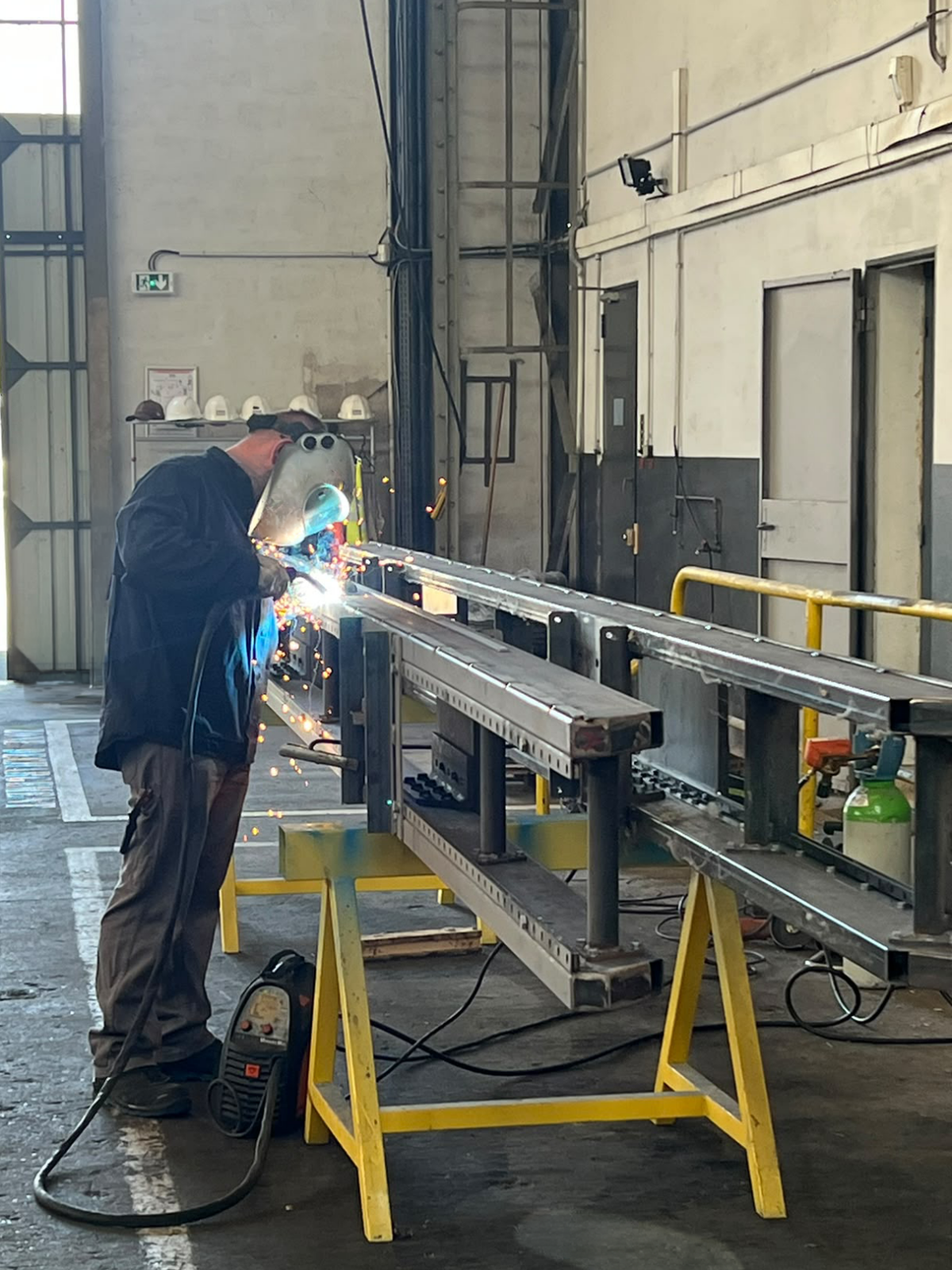
I’ve been an after-sales service technician in the Customer Service department at AKTID for almost 2 years. Like every technician, I’m assigned to a specific territory: I cover the north-eastern quarter of France, and occasionally fill in elsewhere when needed. My day-to-day work includes maintenance training for sorting centre technicians, warranty interventions, local on-site jobs, CVP inspections (Periodic Inspection Contracts) and coordinating projects with subcontractors.
You’ve just carried out maintenance on a ballistic separator. How did you prepare for a job like this?
I’m usually notified about a month in advance. The project manager walks me through the project and the handling equipment required. On my side, I prepare the paddles with the right mesh size and check that all the equipment is ready before I set off. Meanwhile, the project manager takes care of the transport logistics for the heavy equipment, so it’s real teamwork. When the site is far away, you can’t afford to forget anything: there’s no going back.
Why are the paddles on a ballistic separator replaced?
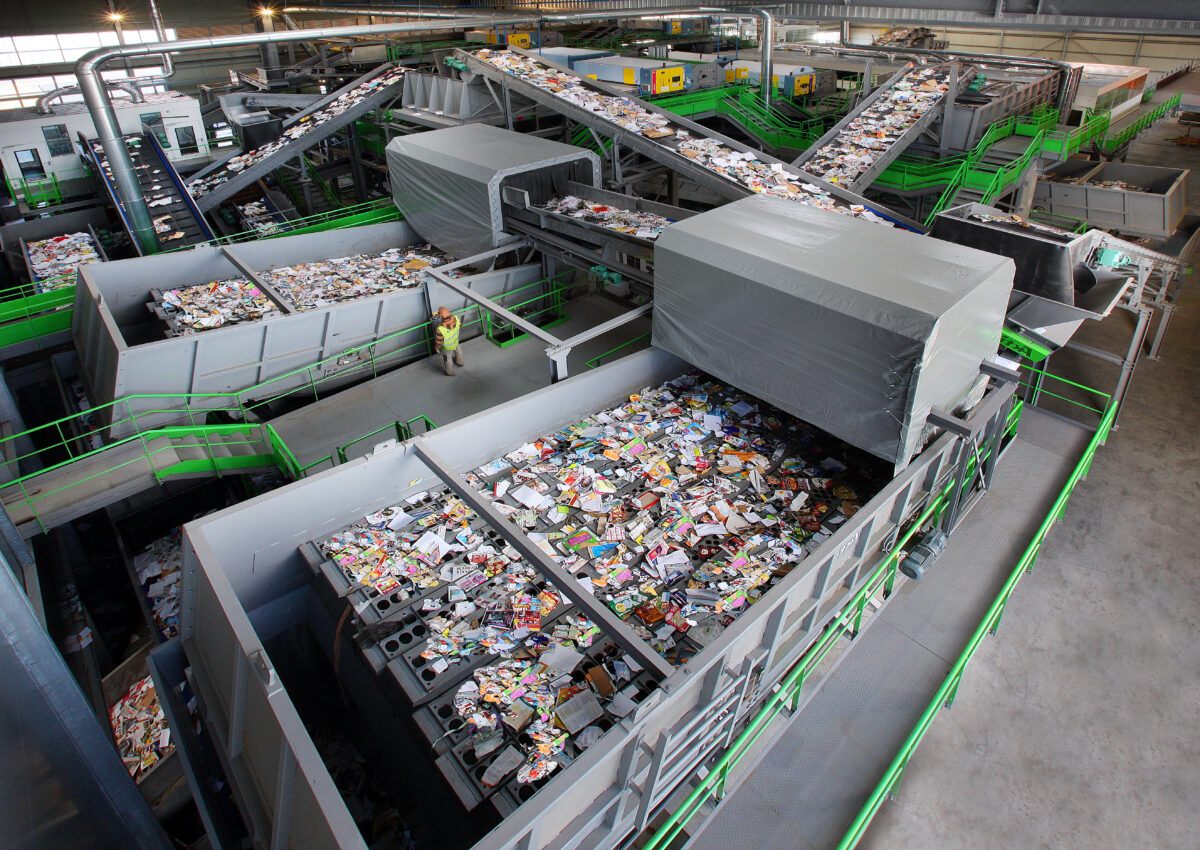
This paddle replacement is preventive: how often it’s needed depends on where the ballistic separator sits on the line. For a ballistic separator located mid-process, we generally plan for a replacement every 3 to 4 years. And we don’t necessarily replace all the paddles at once. This kind of job is scheduled either after the site’s maintenance manager spots signs of wear, or when Aktid’s teams detect it during a CVP inspection.
What were the specific challenges of this latest site?
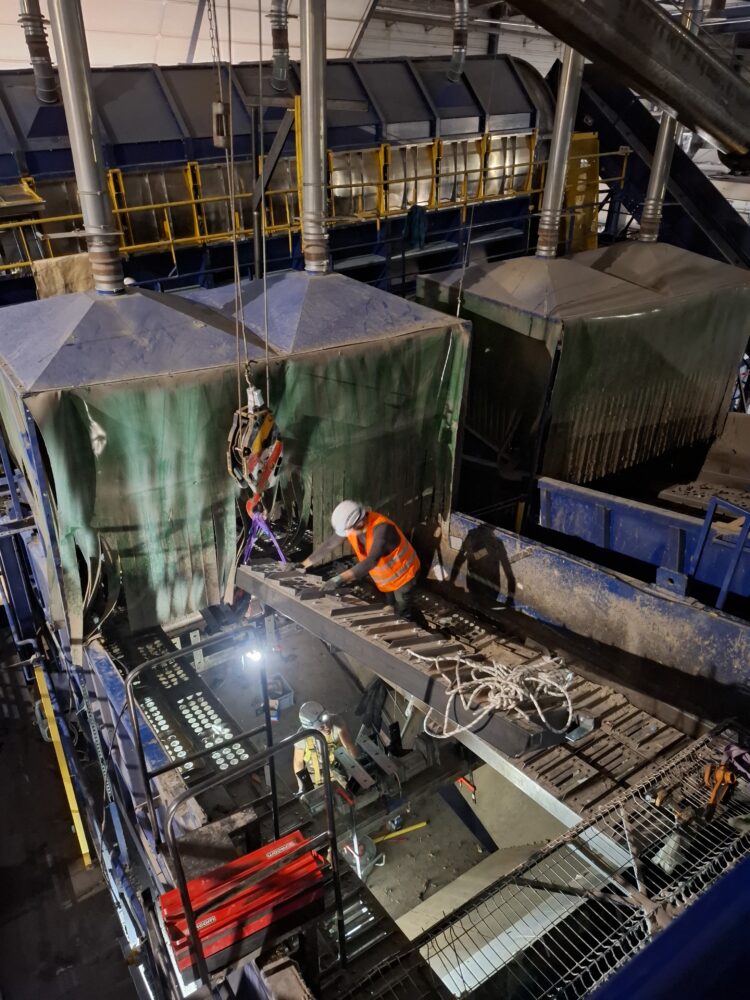
This site has no maintenance beam above the line. Normally, that’s the equipment that makes it easier to handle the paddles during dismantling. Here, we had to bring in a crane for every single part. It completely changes the way you work.
How does the job unfold once you’re on site?
On this site, I was the only AKTID technician present, supported by a small team to replace the paddles over the two days of work. Depending on the type of maintenance and the operations to be carried out, the size of the team may vary, in particular to make certain operations easier or to reduce the length of the intervention.
Safety remains a key priority throughout the process: that is why we ask the operator, well ahead of the intervention, to thoroughly clean the ballistic separator. Without this prior cleaning, the maintenance cannot be carried out
It starts with making the equipment safe by electrically locking out the line, followed by mechanical blocking to preserve the correct settings. Next comes removing the guards and flaps, then the paddles one by one: each one is strapped individually so it can be lifted by crane. Once dismantling is complete, we move on to fitting the new paddles.
What makes this type of job particularly demanding?
The real challenge with these jobs is timing: we always make sure the intervention doesn’t run over schedule, because the site needs to be able to restart on time. And since every site is unique (equipment accessibility, environment, constraints specific to each installation), you also need to be inventive to adapt the maintenance steps and find solutions in the field.
How does a job wrap up?
Once the fitting is complete, we always run tests: each machine is tested individually under no-load conditions to check that everything works before signing off. I then send an inspection report to the project manager, who takes over with the customer, and I also give a verbal summary on site. All in all, including travel, this job took about four days of work.
Aktid Customer Service
Your trusted partner to optimise, modernise and upgrade your facilities.
+33 4 80 03 13 52 – serviceclients@aktid.fr