Passer au contenu principal
264 kb
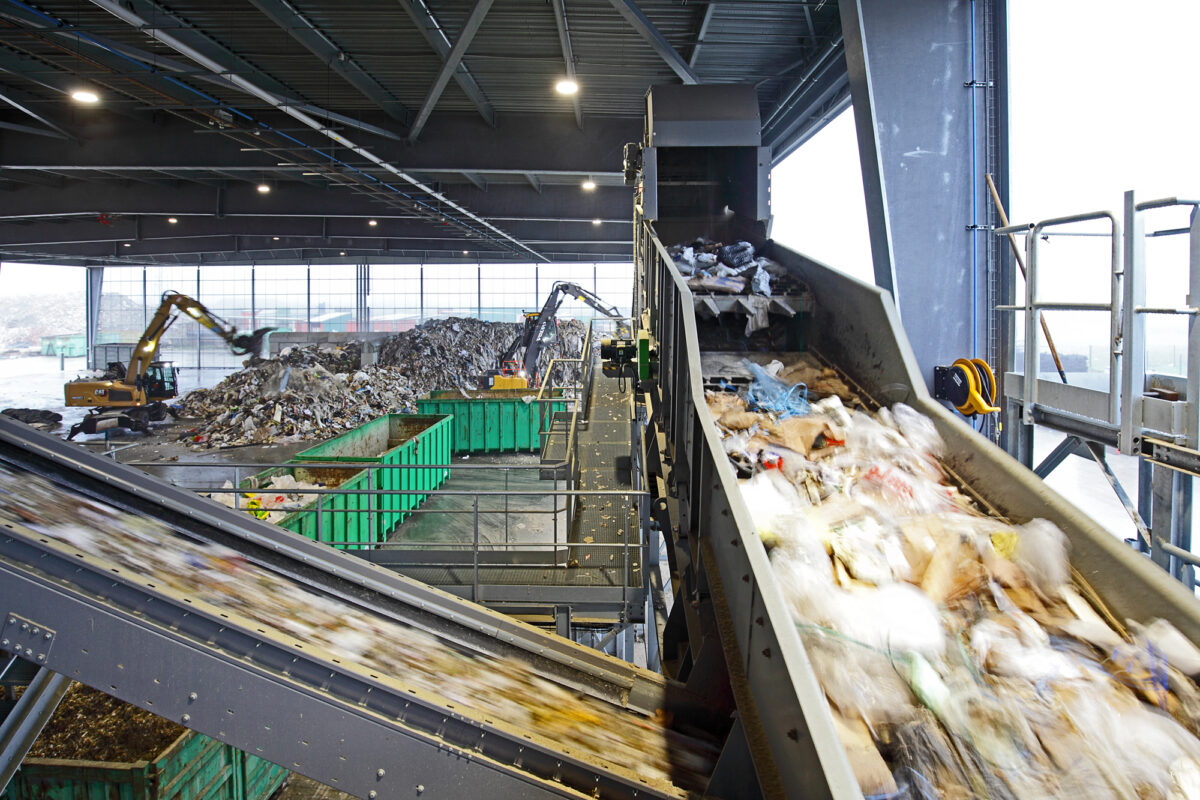
Photograph illustrating a waste stream in a sorting center

Aktid Deciphers – The challenge of flow regulation

Performance is built on the ground: our experts share their field experience and their perspective on the real-world challenges of waste sorting.

Regulating flows, a key challenge in sorting facilities

Like every year, the May bank holidays mean traffic jams on the roads. Heavy traffic, irregular flows and a few congestion points are sometimes enough to disrupt an entire traffic corridor.

In sorting facilities, the logic is quite similar. The waste arriving at sorting plants is, by nature, highly heterogeneous: a wide variety of shapes, sizes, weights and materials coexisting on a single line. This constant variability puts the facilities under significant strain. From the very start of the process, the input flow can be irregular and create imbalances that affect the entire system.

Major impacts on facilities

In the field, this heterogeneous waste causes flow irrégularités along the line, with consequences that are multiple and well known to operators:

  • Frequent blockages, linked to occasional overloads,
  • Premature wear of equipment, subjected to irregular stress,
  • Line stoppages, directly impacting availability,
  • Degradation of sorting quality : material that is difficult to access in the sorting cabin, poor separation, elements trapped in compacted masses.

It is estimated that up to two-thirds of conveyor stoppages are caused by blockages in sorting facilities.

Beyond significantly affecting availability and therefore the profitability of the plant, these blockages also seriously deteriorate working conditions for teams, who then have to manually clear the accumulated material.

Which flows are the most exposed  

All waste streams are affected by this phenomenon, from separate collection to commercial and industrial waste, as well as household waste. Their heterogeneity promotes, from the very feeding stage of the line, the formation of load irregularities: underfed zones or, conversely, material build-ups. These imbalances disrupt the operation of downstream equipment, reduce sorting performance, and can lead to blockages that may even result in a complete process shutdown.

In addition, certain types of waste such as plastic films, wires, hooks, or long items create snag points and encourage the formation of compact masses responsible for blockages.
These blockages are even more significant when there is little regulation at the start of the process—as is often the case in commercial and industrial waste streams—where direct loading generates flow peaks that propagate throughout the entire line, from feeding to final sorting stages.


However, imbalances are not limited to the start of the line.  Flow heterogeneity can locally overload the process or degrade sorting performance. This is particularly the case in separate collection, where large cardboard flows, after de-cartoning, often form piles that make manual sorting in the cabin difficult for operators. Similarly, a sudden influx of a specific waste category can saturate certain equipment and reduce the efficiency of optical sorters.

Even with properly sized installations, it remains difficult to control the intrinsic variability of incoming flows, in terms of composition and density.

In other words, a well-designed line is not immune to imbalances if the flow itself is not regulated.

How can this issue be addressed ?


88 kb
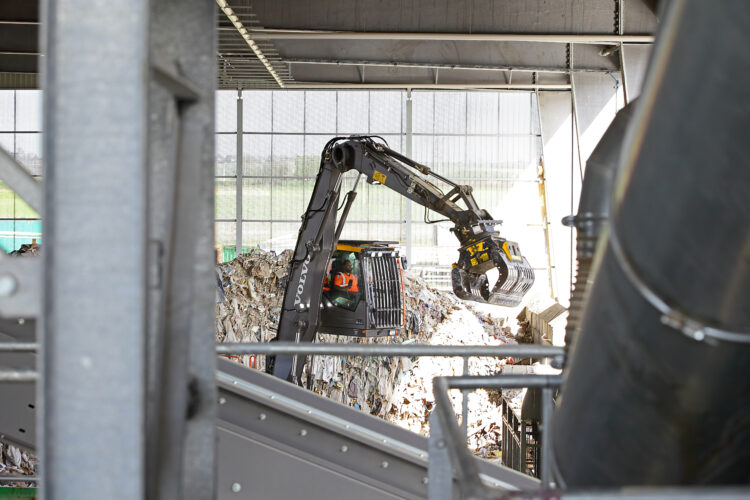
Photographie illustrant un déchargement dans un centre de tri de déchets

The key role of feeding operations

Faced with this variability, the feeding stage is a key lever for regulation.

In practice, the loader can:

  • break up piles upstream,
  • remove certain unwanted items,
  • adjust their actions to feed the line gradually by “sprinkling” the material.

However, this regulation relies heavily on operator experience. Turnover, differences in working practices, or operational constraints can lead to significant variability.

A poorly controlled feed at the inlet then results in an amplification of imbalances across the entire process.


Furthermore, some imbalances appear or re-form further along the line. In separate collection, for example, accumulations of large cardboard boxes can saturate certain areas without any possibility of direct intervention, sometimes forcing operators to manually slow down conveyors to maintain acceptable sorting conditions. In commercial and industrial waste streams, when multiple inlets need to be balanced, flow rate adjustments are still often made manually: without continuous measurement of the incoming load, the risk of misjudgment is either overfeeding certain equipment—leading to blockages—or, conversely, underutilising the line’s capacity.

Towards dynamic flow regulation

To overcome this flow heterogeneity, dynamic flow regulation solutions can be deployed. Suitable for all types of waste, Smart Regulation continuously measures the material load (mass and/or volumetric measurement) and automatically adjusts equipment throughput to smooth incoming flows. The objective is to break flow peaks and ensure a smoother material stream.

Deployed at the start of the line—and in some cases at key points in the process—this technology enables:

  • a reduction in blockage occurrences,
  • improved equipment availability,
  • better material accessibility for sorting,
  • while maintaining the overall throughput of the facility.


142 kb
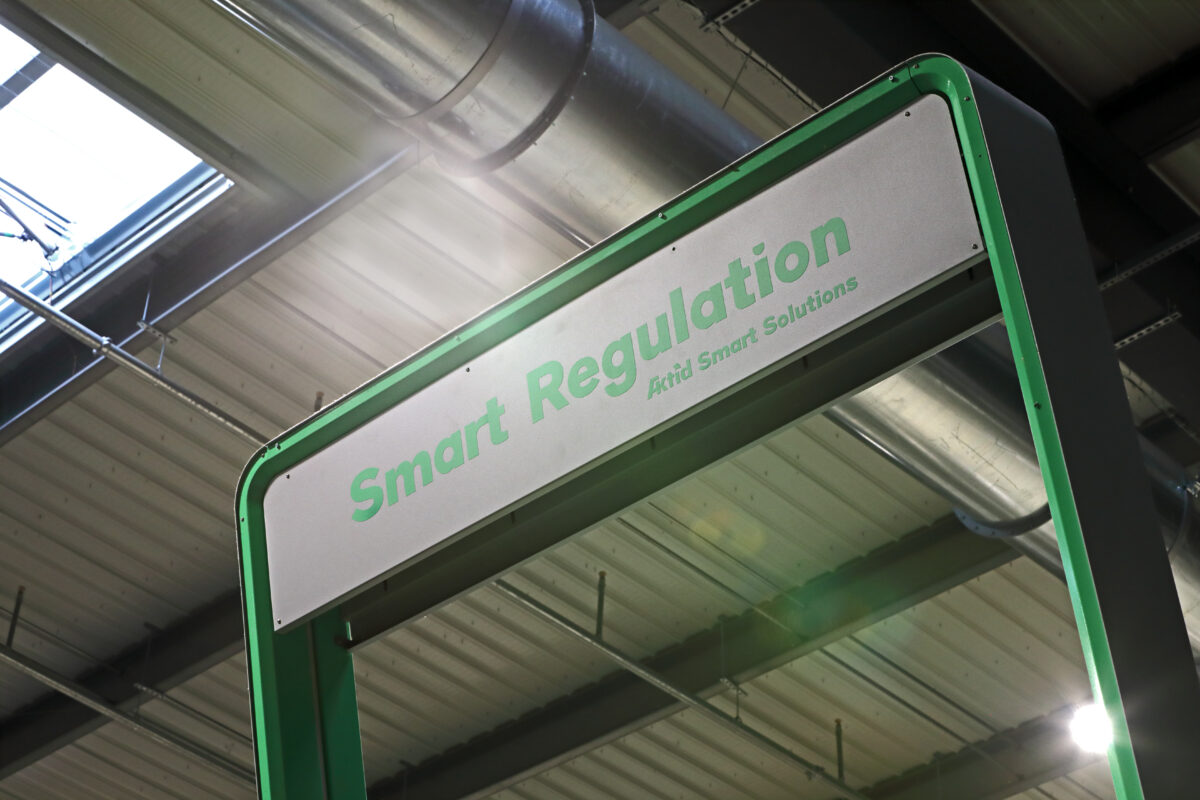
Photograph illustrating Smart Regulation

Each Smart Regulation system is configured, commissioned, and fine-tuned by our teams according to the specific characteristics of each site and each waste stream. The choice between mass and/or volumetric regulation, as well as its placement within the process, is studied by Aktid experts based on the nature of the treated waste, the line’s operating conditions, and the client’s needs. In commercial and industrial waste (C&I), we have recorded an availability gain of around 10 percentage points for some clients thanks to the implementation of volumetric regulation. In separate collection, mass-based regulation enables an additional 2 hours of operation per month.

The performance of Smart Regulation is not only determined by the deployed technology, but also by how well it is adopted in the field. That is why, from the earliest stages of the project, loaders, operators, and maintenance teams are fully involved and trained to understand its purpose and unlock its full potential.

Flow regulation is often designed at the start of the line, where imbalances are most visible. However, field experience shows that material build-ups can also re-form further along the process, requiring additional regulation measures.

By also acting in the middle of the line, or even on secondary feeds to support a main line operating under capacity, regulation becomes a dynamic lever for overall optimisation through cascading adjustments. It is no longer limited to smoothing the inlet flow, but helps control the entire process, as closely as possible to real operating conditions.

84 kb
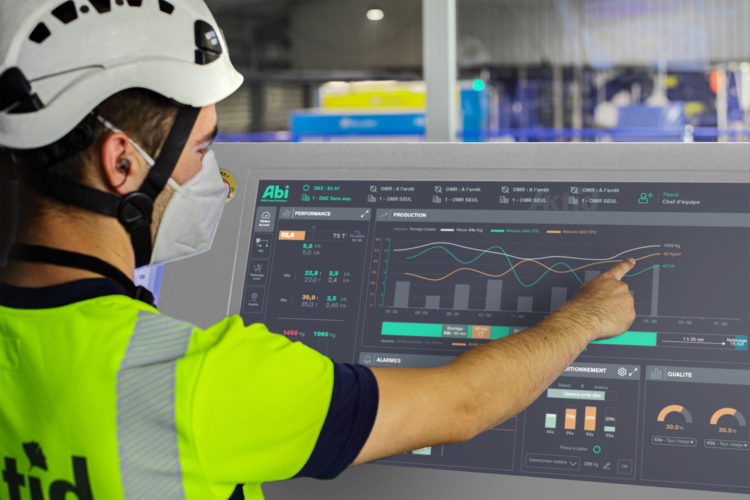
Visuel présentant le pupitre ABI, produit de la gamme des AKTID Smart Solutions

EXPERT PERSPECTIVES

Regulating the flow is not only about improving sorting performance; it also helps create better working conditions for operators, with fewer emergency interventions on the line and a smoother sorting process.

Anis
Client Account Manager at Aktid

In the upcoming articles of this series, our experts will continue to share their experience and insights, shedding light on the practical challenges faced by sorting centers, always close to field realities.

21May2026

Share this article: