
Aktid is proud to share the article published in Recyclage Récupération magazine (Issue 71), highlighting the new Solid Recovered Fuel production facility for Trivalis, operated by Veolia.
794 kb
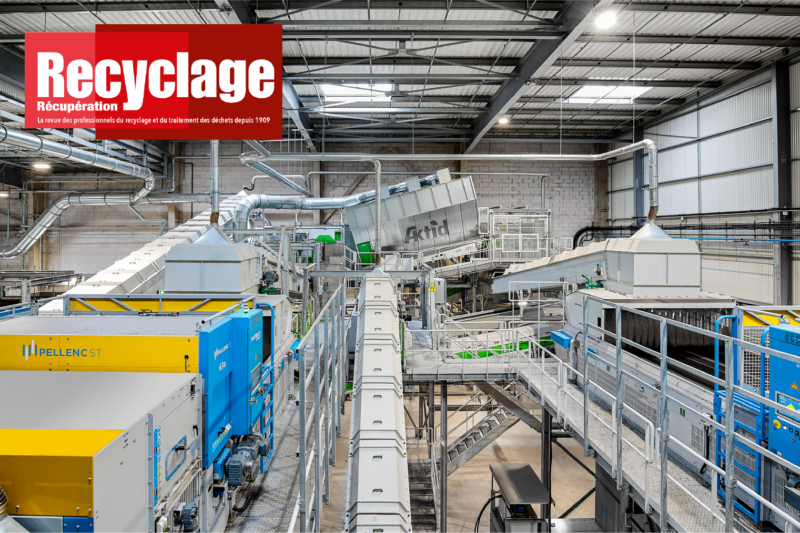
SOLID RECOVERED FUEL – TRIVALIS, VEOLIA AND AKTID
Trivalis, Veolia and Aktid “Firing on All Cylinders” for MBT Rejects
With no household waste incineration facility and limited landfill capacity, the Vendée region is initiating its transition toward the energy recovery of residual waste. This shift is taking shape through an innovative project: the production of Solid Recovered Fuel (SRF) from rejects generated by Energy and Organic Recovery Units (UVEOR), formerly Mechanical-Biological Treatment (MBT) facilities. To achieve this, the turnkey contractor Aktid has designed and delivered a brand-new installation to Veolia, which will operate it on behalf of Trivalis, the Vendée waste management authority.
Launched on January 1, 2003, the departmental joint authority Trivalis is responsible for the treatment of all waste collected in the Vendée region.
“In 2023, this represented around 450,000 tonnes of waste, including 90,000 to 110,000 tonnes of residual household waste,” explains Erwan Calonnec, Director General of Services at Trivalis. “From the outset, elected officials expressed the desire to build public treatment facilities whose operation would be entrusted to service providers,” he adds.
As a result, two mechanical-biological treatment (MBT) facilities—now known as UVEOR (Energy and Organic Recovery Units)—were established in the north and south of the department: Trivalandes in Saint-Christophe-du-Ligneron and Trivalonne in Château d’Olonne. Built in 2011 and modernized in 2019, they handle all household waste from Vendée residents. “The largest facility, Trivalandes, has a capacity of nearly 55,000 tonnes per year. […]”
However, the recovery rate of residual household waste (RHW) processed in UVEOR facilities results in 45% to 47% sorting rejects, amounting to 40,000 to 42,000 tonnes of “ultimate” waste to be disposed of each year. The available outlets are well known: incineration or landfill. Yet disposal capacity for UVEOR rejects at the nearest incineration facilities—particularly in Nantes—is very limited. “Not only in terms of capacity, but also because the calorific value of these materials is significantly higher than that of household waste and therefore unsuitable for incinerators,” notes Guillaume Chapuis, Technical Manager at Veolia, which has operated Trivalandes since 2012.
As for landfill, given regulatory requirements and targets for reducing landfilled tonnages, Trivalis must optimize its waste management strategy.
Energy recovery of primary rejects
The authority then decided to move toward the recovery of this ultimate waste in the form of Solid Recovered Fuel (SRF). […]. In 2017, Trivalis therefore introduced an optional phase for the construction and operation of an SRF preparation unit as part of the renewal of the global performance contract for Trivalandes. A challenge successfully taken up by Veolia, the historical operator.
[…] This unit is supplied with primary sorting rejects from the two Vendée UVEOR facilities (Trivalandes and Trivalonne), amounting to 35,000 tonnes per year, as well as from two additional facilities in the Loire region for 15,000 tonnes per year: Pornic Agglomération in Loire-Atlantique and Valor3e in Cholet, Maine-et-Loire.
Designed for an incoming flow of 50,000 tonnes per year, the plant aims to produce at least 15,000 tonnes of cement-grade SRF and achieve a minimum recovery rate of 54%. This rate includes not only fuel preparation but also the recovery of materials such as ferrous and non-ferrous metals (approximately 4,000 to 5,000 tonnes recovered), as well as PVC (sent to landfill). Another key requirement is a maximum reject rate of 46%, enabling Trivalis to nearly halve the volume of waste sent to landfill.