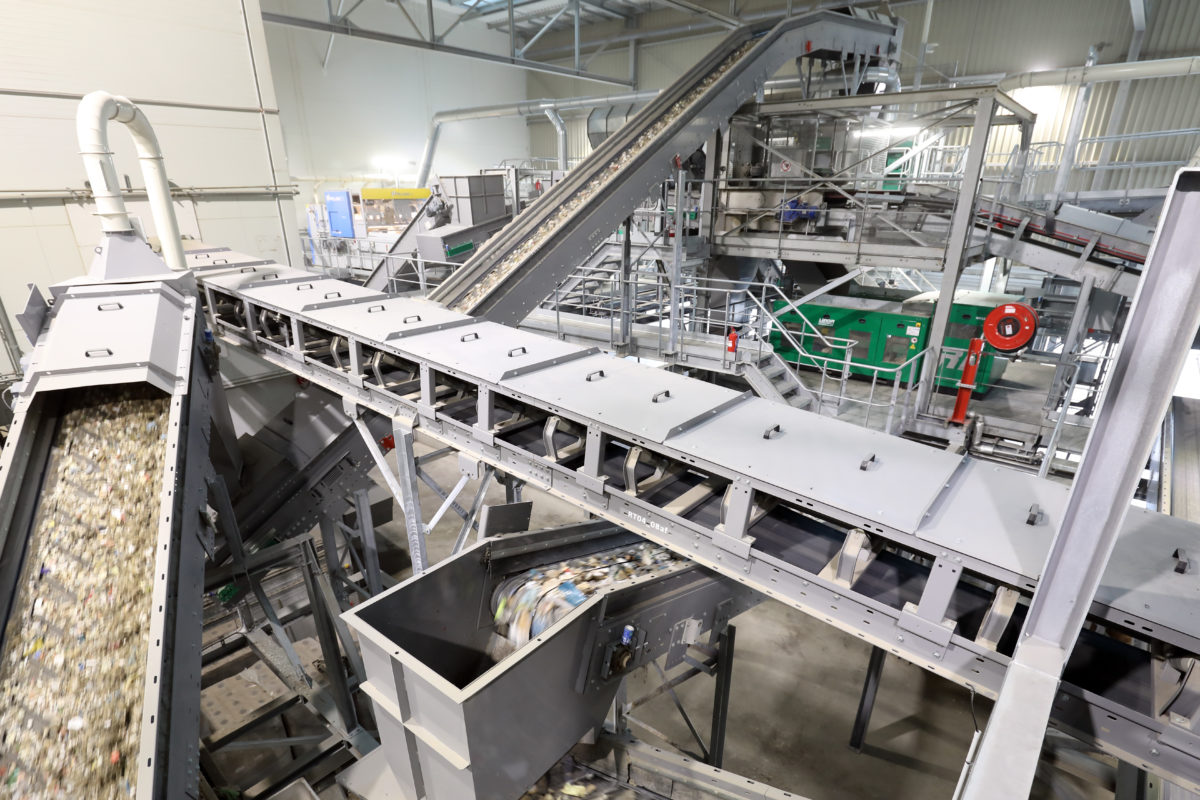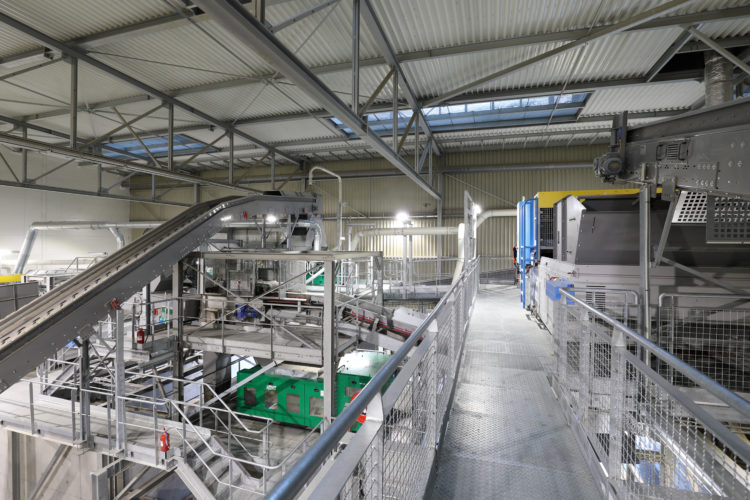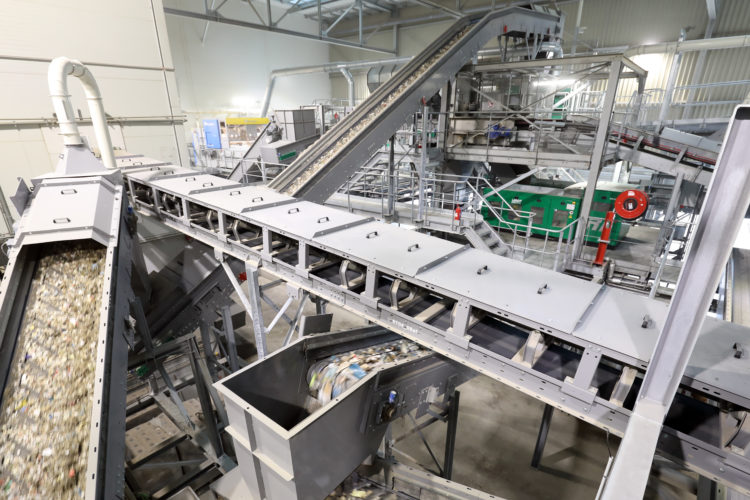
Aktid equips Guyot Environnement with a new high-performance 8,000 m² SRF facility, processing 65,000 t/year and dedicated to waste-to-energy recovery.
Recyclage Récupération — Guyot and Aktid deploy a brand-new SRF facility
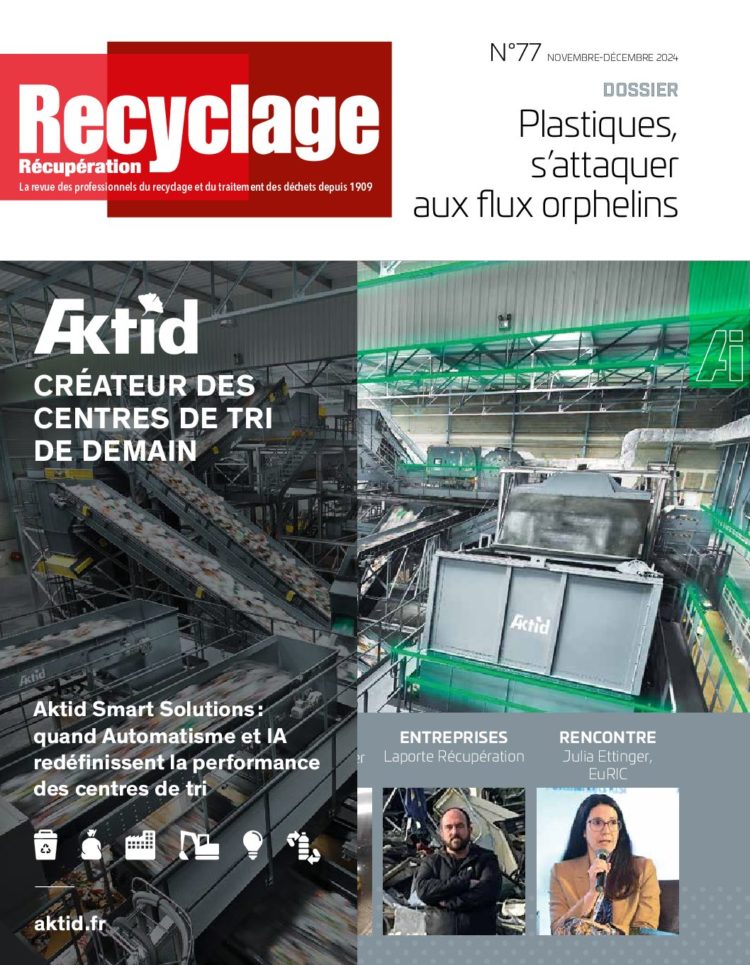
Aktid is proud to share the article published in Recyclage Récupération magazine, issue no. 77, highlighting the new recovery and Solid Recovered Fuel (SRF) production unit of the Guyot Environnement Group in Morlaix.
GUYOT and AKTID deploy a brand-new SRF facility
With its new Morlaix facility, the Guyot Environnement Group claims to operate one of the most advanced plants in France for the sorting and recovery of industrial and bulky waste. Capable of recovering more than one third of high-quality recyclable materials while generating only 5% ultimate waste, the plant focuses on the production of Solid Recovered Fuel (SRF).
These fuels are produced through carefully controlled and automated recipe development, ensuring compliance with the specific technical requirements of each outlet. To achieve this level of performance, Guyot Environnement relied on the expertise of a long-standing partner: the Savoy-based turnkey contractor Aktid.
AKTID, a key partner
Since 2014, Guyot Environnement has been working with Aktid on the design and construction of sorting and recovery plants for industrial waste. The first line developed with Aktid enabled Guyot to validate its SRF production model, achieving a recovery rate of 70%.
Building on this success, the operator decided to scale up with a modern facility capable of “sorting more, and sorting better.” As a result, with an investment of €30 million—ten times higher than in 2014—Guyot Environnement now operates a plant designed to process 70,000 tonnes per year of industrial and bulky waste, almost twice the capacity offered in 2014.
Shared expertise
This new facility is the culmination of an intensive phase of preparation and reflection carried out over more than two years. […] For this new project—more specifically for defining the new sorting and material preparation process—the Breton industrial group once again called on the expertise of its partner, Aktid.
[…] With around ten turnkey facilities operated across France—both for major national players (Suez, Veolia, Paprec) and for independent operators in the sector (Bourgogne Recyclage, Braley, etc.)—the company benefits from widely recognised experience and expertise in sorting and recovery, as well as in SRF preparation from various feedstocks (industrial and bulky waste sorting residues, selective collection residues, MBT residues, etc.). […] “Once again, Aktid was able to fully embrace our project by designing the most efficient possible sequencing of the different technologies, with a dual objective: productivity (250 to 300 tonnes of incoming waste per day) and, above all, quality (a maximum of 5% ultimate waste).”
“This is certainly the most advanced facility we have built to date,” says Vanessa Troillard, Head of Marketing at Aktid. […]
Carried out over six months, with less than two months of complete interruption to sorting operations, the different phases of the project required a high level of adaptability from Aktid’s teams. “The project combines new buildings with existing ones within a single overall setup. In addition, the process was built using both revamped equipment and brand-new machines. Finally, we carried out extensive work on dust extraction throughout the plant by combining several technologies. Given the size of the facility and the highly dusty nature of the waste treated, this is the first time we have deployed a system on this scale,” explains Vanessa Troillard.
Tailor-made SRF
With this new facility, the two partners state that they are pushing the recovery potential of each particle size class—whether material or energy recovery—to its fullest extent. “To achieve this, we went very far in terms of purification and product capture,” confirms the Aktid representative.
“Ultimately, the goal is not to produce one SRF, but several SRFs,” insists Bertrand Le Floch. This tailor-made approach aims to deliver products that specifically meet the technical specifications of each outlet […] Guyot Environnement also plans to fine-tune the composition of these SRFs by precisely controlling their recipes. This involves, on the one hand, controlling the materials and waste fed into the process, and on the other, adding additional feedstocks along the line.
In this way, the group intends to channel to Morlaix part of the co-products generated by its automotive shredding residue (ASR) sorting and refining facility, sourced from its Brest shredder. These residues—foams, textiles and various plastics with high calorific value—can, for example, enhance the characteristics of the products prepared in Morlaix to meet the expectations of certain end users. “We can also adjust the share of biogenic elements, the ash content, the acceptable chlorine level, and so on […]” highlights Bertrand Le Floch.
Proven technologies
Without disclosing the exact details of the sorting process implemented in this new facility—“this falls under our industrial know-how,” he notes—Bertrand Le Floch explains that the new plant builds on the main operating principles of the former Morlaix facility, whose efficiency has already been widely proven […].
Guyot Environnement and Aktid have added a complete range of equipment designed to optimise material recovery, including magnetic overband separators, eddy current separators and optical sorting machines. […] These tools are used either to clean the streams—for example by removing PVC—or to sort specific materials such as wood and mineral fractions.
State-of-the-art process control
Finally, the Savoy-based turnkey contractor has integrated into this line its latest technological advances in the collection and analysis of operational data. In addition to providing real-time performance monitoring of the entire facility, this plant control support tool—known as ABI—also operates based on data feedback from the belt conveyor motors. “Analyzing this data makes it possible to anticipate any jamming or blockage phenomena as effectively as possible,” explains Vanessa Troillard.
A large touchscreen enables the operator to supervise all aspects of plant control and to view all production statistics in the form of diagrams and summary tables. “This industrial control tool perfectly supports our approach to the automated composition of SRF recipes,” enthuses Bertrand Le Floch.