Performance is built in the field: our experts share their experience and insights on the practical challenges of waste sorting
Aktid Deciphers – The Nitrous Oxide Scourge
A phenomenon on the rise in sorting centers
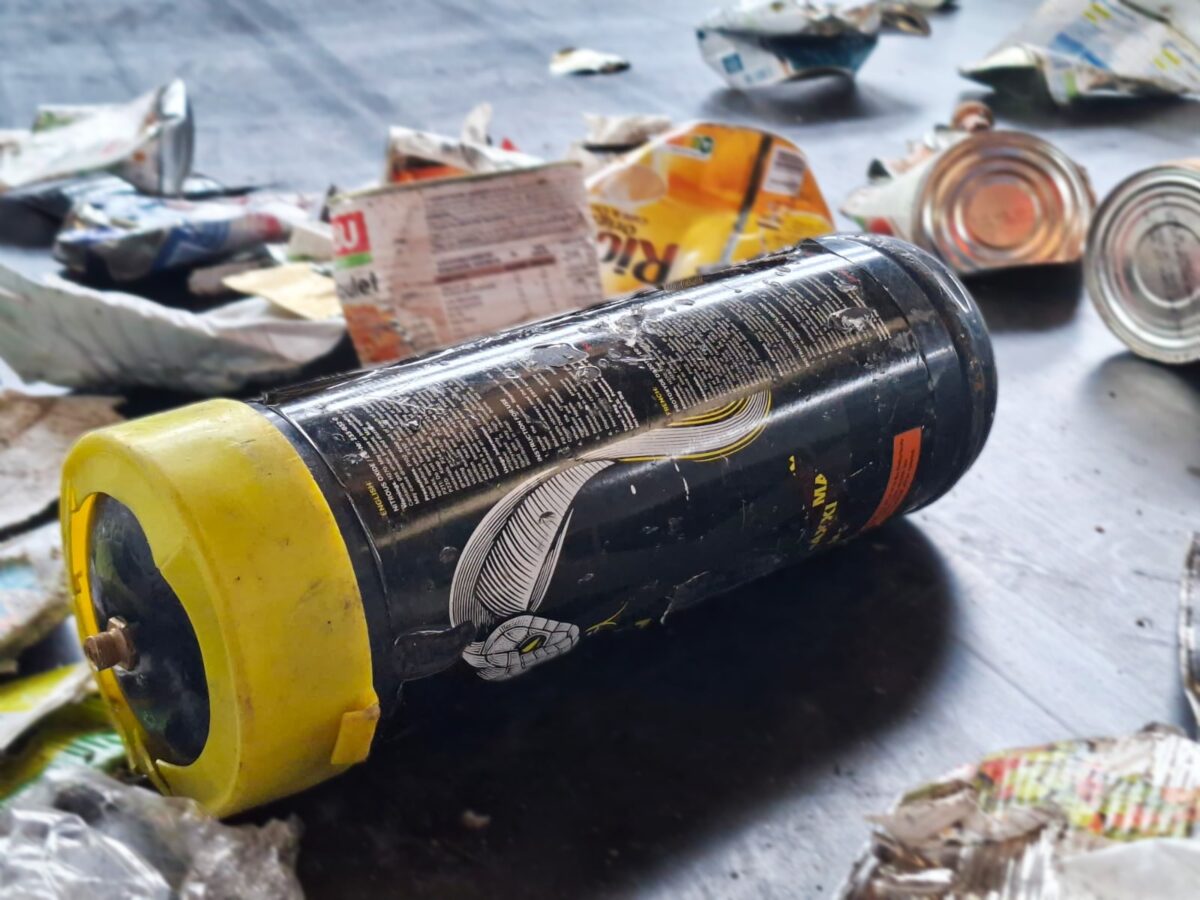
In just a few years, sorting centers have seen the arrival of a new and unwanted intruder: nitrous oxide canisters.
Originally intended for medical or food uses (particularly for whipped cream dispensers), these pressurized metal canisters are now increasingly diverted for recreational use. Their growing consumption has led to a rise in littering in public spaces and to their presence in household waste streams (residual waste or selective collection).
A phenomenon that is rapidly increasing, with very real health and industrial consequences.
Where do these unwanted items originate from?
These canisters are frequently thrown into household waste, placed in selective collection, or abandoned in the street before being collected by municipal cleaning services.
However, these canisters must be considered hazardous waste. Due to the presence of residual gas, they should be taken to waste collection centers, just like domestic gas cylinders (butane or propane), where they can then be handled through specialized hazardous waste treatment processes.
Nitrous Oxide: What Are the Risks for Sorting Centers?
The main issue is that the canisters received at sorting centers are not completely empty. As a result, they still arrive under pressure in facilities that are not designed to handle this type of risk.
At sorting centers (selective collection)
Made of steel, these canisters are naturally directed toward the steel fraction via overband magnets. They then continue through the process until they reach the baling press.
It is at this stage that the risk becomes critical. Compression can trigger explosions, leading to direct risks for operators and visitors, including:
- Metal projections,
- Outbreaks of fire,
- Severe damage to the baling press (knives, counter-knives, ram, compression chamber),
- Complete shutdown of the installation for maintenance.
A single canister can be enough to cause considerable damage. Some large-capacity models (up to 3 liters) are now available on the market and present a particularly high explosive potential.
In Waste-to-Energy (WtE) plants
The phenomenon manifests differently in waste-to-energy plants, where rising temperatures trigger explosions.
In some affected areas, several major explosions can occur each day, with considerable consequences:
- Damage to grates and refractory linings,
- Repeated technical shutdowns,
- High maintenance costs,
- Significant operational losses.
Is this phenomenon evenly distributed across the country?
The presence of nitrous oxide canisters varies significantly from one territory to another.
Although dense urban areas are currently the most affected, the phenomenon is spreading and is now impacting an increasing number of territories. On some heavily affected sites, up to 50 nitrous oxide canisters per day are found in incoming waste streams.
This disparity makes anticipation more difficult and requires responses adapted to local contexts and evolving usage patterns.
How can this issue be addressed?
To address this issue, several levers can be activated:
Awareness and regulatory framework
- Clarification of sorting guidelines,
- Public awareness campaigns,
- Regulatory developments,
- Stronger control over distribution.
Product design evolution
Exploring automatic full depressurization of canisters after use represents a structuring medium-term solution.
However, these first two levers mainly fall under the responsibility of public authorities and manufacturers. They go beyond the direct scope of action of sorting center operators, who must, in the meantime, manage this risk on a daily basis.
Technical solutions in sorting centers
In the short term, operators must therefore secure their installations and limit the exposure of presses and equipment to pressurized objects.
A first approach consists of routing the steel fraction through a sorting cabin, allowing canisters to be manually removed before baling. However, because this fraction is generally very pure (thanks to the high efficiency of magnetic extraction), the steel stream is often located downstream in the process, far from the sorting cabins. Redirecting this stream on existing lines therefore requires significant layout modifications.
Whether as part of retrofitting an existing line or designing a new sorting center, this solution nonetheless introduces several additional constraints:
- Layout adaptations (additional conveyors, structural modifications),
- Additional investments,
- Mobilization of personnel to carry out manual sorting,
- Increased operator exposure to a stream that may contain pressurized objects.
What are the economic impacts?
Beyond the human risk, the financial consequences are significant: high maintenance costs, production shutdowns that can last several days, increased insurance risks, operational losses, and the specific management of canisters as hazardous waste, often borne by local authorities.
Across the sector, these damages are estimated at €15 to €20 million per year, according to the National Union for the Treatment and Recovery of Urban and Similar Waste (SVDU). These costs include repairs to damaged equipment, operational losses, and the diversion of untreated waste volumes.
Smart Filter: AI-Powered Detection
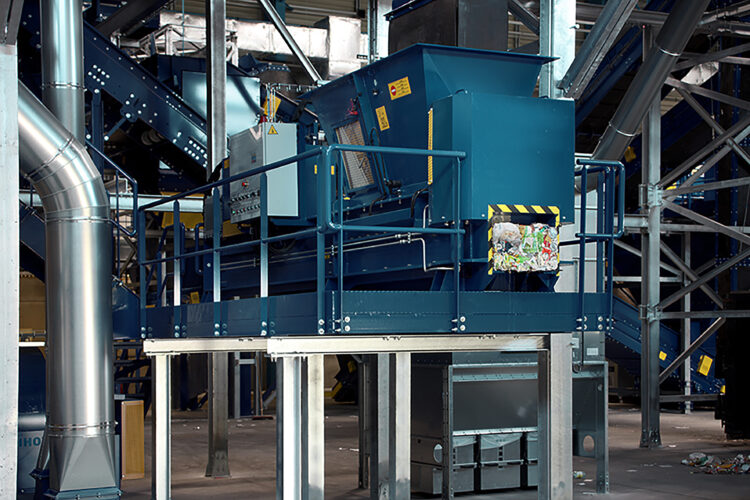
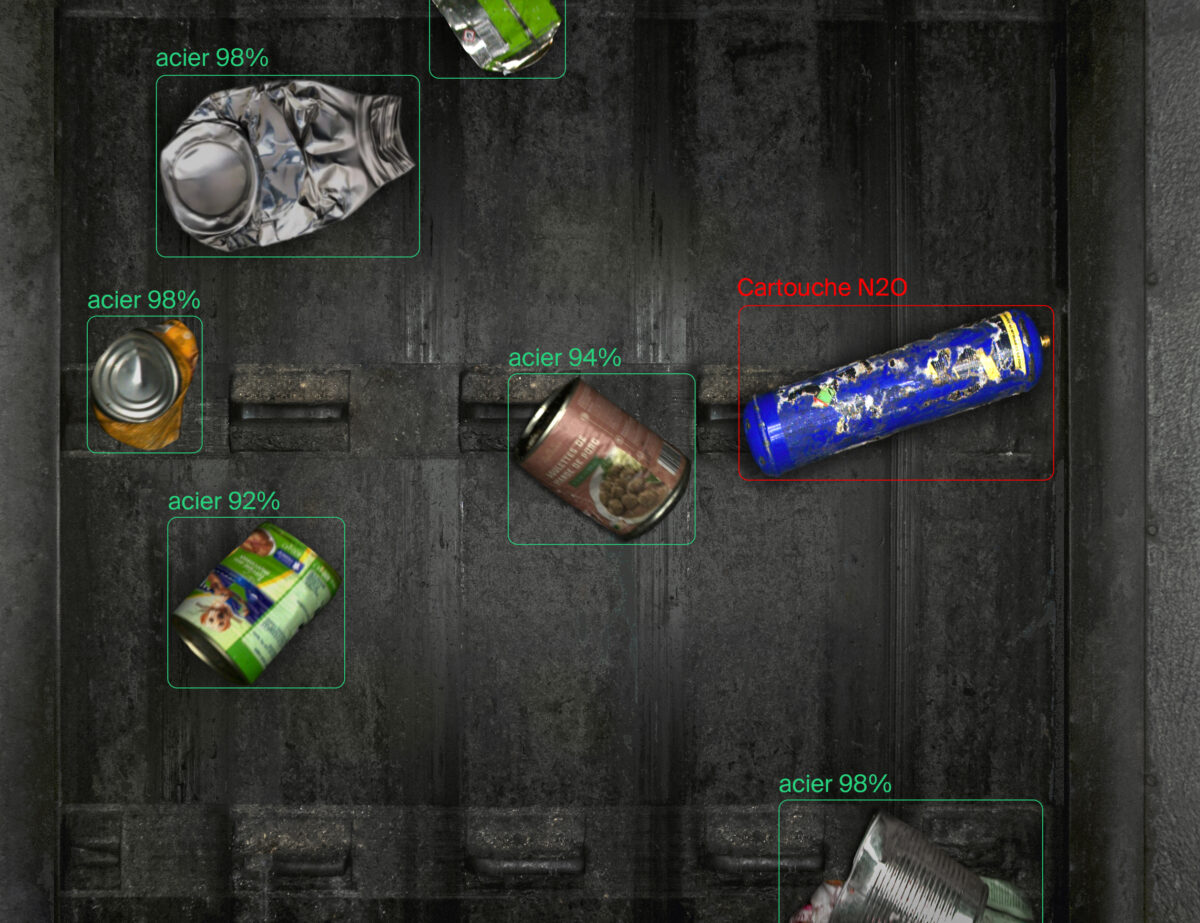
In this context, automated solutions can also be deployed. This is notably the case with Smart Filter, an AI-based detection system designed to identify nitrous oxide canisters — as well as other unwanted items (metal bars, gas cylinders, aerosols, etc.) — directly on the steel conveyor line.
Smart Filter uses cameras to detect hazardous objects, identifies them in real time thanks to an artificial intelligence algorithm trained on several tens of thousands of unwanted items, and then automatically ejects them before the baling stage.
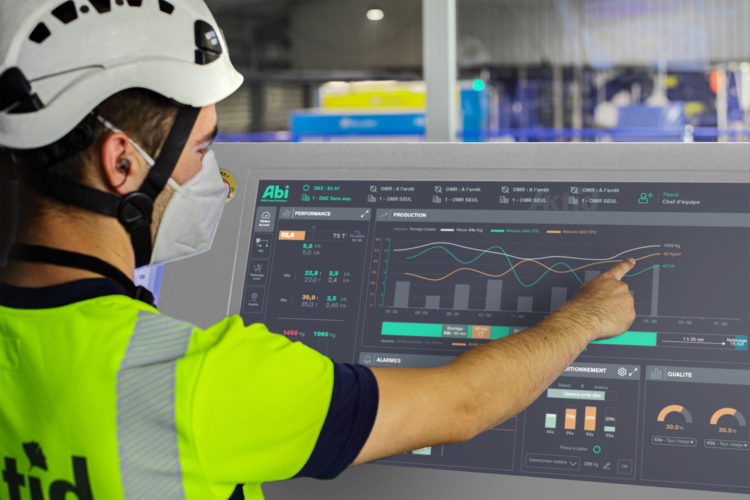
As a system integrator, Aktid provides a truly turnkey solution: each Smart Filter is specifically configured and integrated by our teams to meet the constraints of each individual site. From equipment supply to installation and commissioning, the entire project is managed end-to-end, with minimal disruption to the operating line.
Beyond the specific case of nitrous oxide canisters, the broader issue of fire risk arises. Every year, fires affect waste sorting and recovery facilities, sometimes with major consequences for both infrastructure and teams.
Reducing exposure to pressurized objects and other flammable unwanted items is therefore becoming a key challenge to ensure the long-term reliability of installations, protect teams, and maintain their insurability. More than ever, detecting and removing hazardous unwanted items has become a strategic priority for sorting centers.
© Aktid
Expert Perspectives
“Beyond awareness and regulatory developments, the challenge is to identify and isolate these unwanted items from the steel stream before the baling stage. ”
Benoit
Head of Revamping Sales at Aktid